Image
Life stage
Email (of contributor)
po.po.pro.moths@gmail.com
Notes (optional)
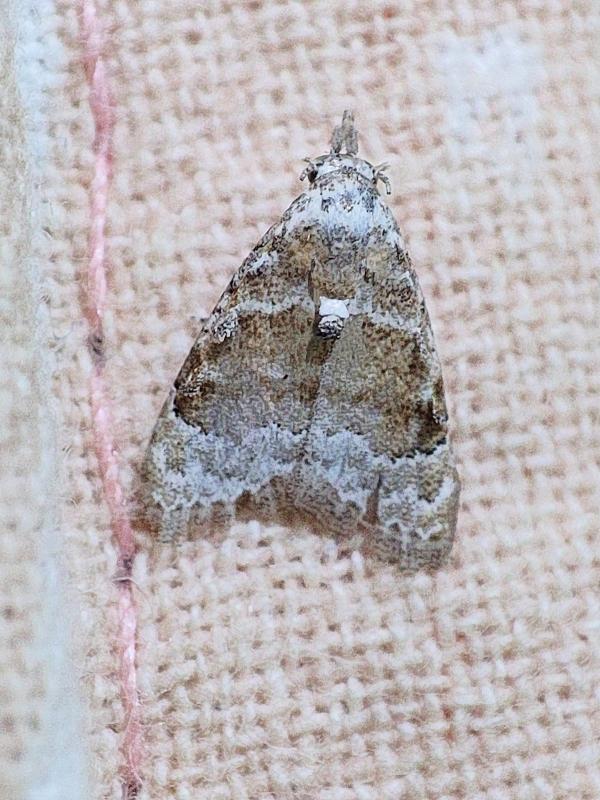
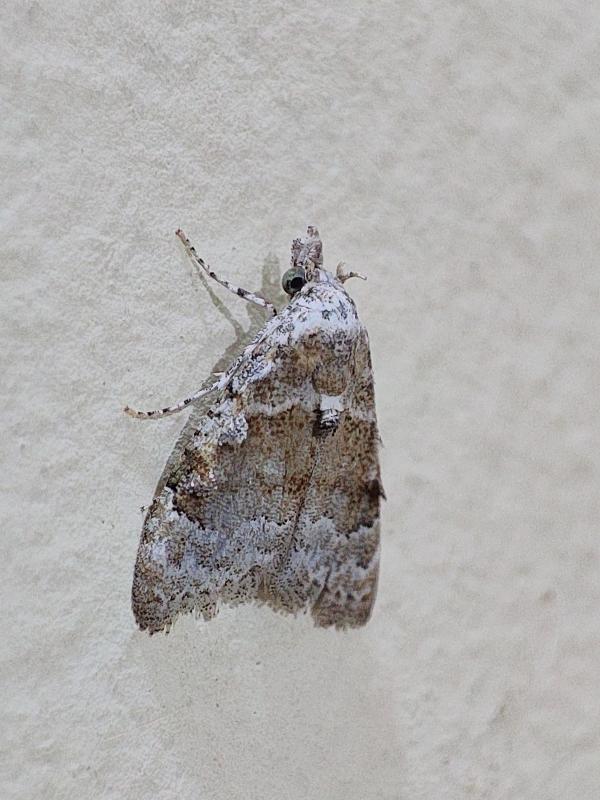
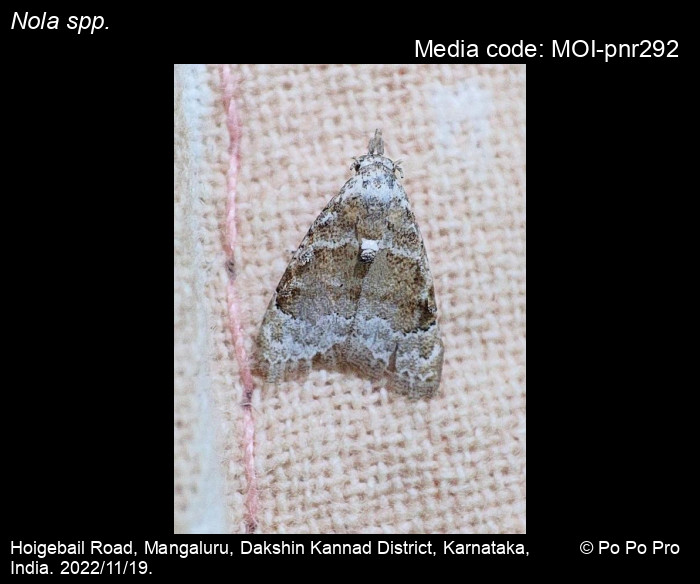
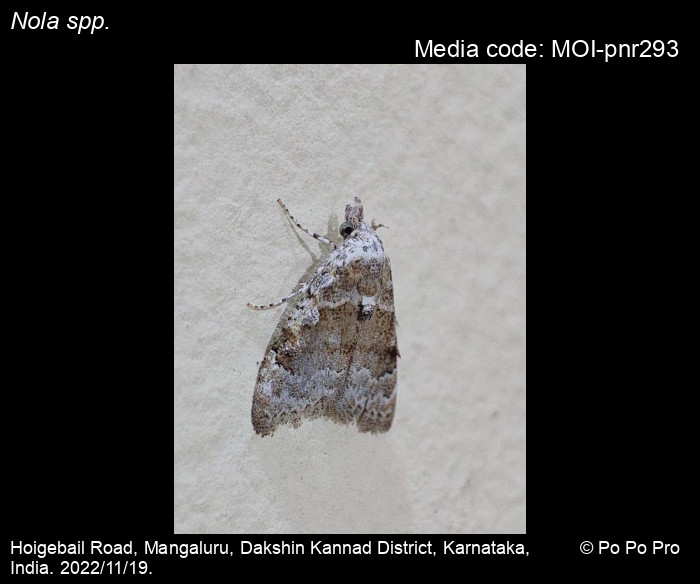
Proposed ID: Nola mesotherma (Hampson, 1909)
I find this a tricky species to ID, and base my ID primarily on Hampson's elaborate original description and one of his accompanying illustrations. It is the more recent literature that complicate the ID.
References
1. https://www.biodiversitylibrary.org/item/71907#page/379/mode/1up (description by G. Hampson as Celama mesotherma in Ann. Mag. Nat. Hist. ser.8 v.4; type locality Ceylon, 'Rambhakkana')
2. https://www.biodiversitylibrary.org/page/30166287#page/186/mode/1up (description repeated in J. BNHS vol. 20, but with accompanying Illustration)
https://www.biodiversitylibrary.org/item/95460#page/609/mode/1up (illustration: plate G, fig.3, in vol.21)
3. https://www.biodiversitylibrary.org/page/25161886#page/425/mode/1up (same description repeated a second time in Cat. Lep. Phalaenae B.M. Suppl. 1, 1914, as Celama mesotherma)
https://archive.org/details/catalogueoflepid12brit/page/n102/mode/1up?view=theater (Illustration in the same vol., Pl. 22, fig.15)
Please note that this volume also contains a description of 'Nola mesotherma' on pg. 409, but that can be disregarded, as it is a junior secondary homonym and is now known as the African species Meganola mesothermoides.
4. Moths of Thailand, Noctuoidea vol. 3, part 2
pg. 180 (distribution)
Plate 24, fig. 32-33.
The MoT text cites another Thailand reference with illustrations (Laszlo et al. 2010). But only the text of that reference is accessible, and not the plates.
5. https://www.mothsofborneo.com/part-18/nolinae/nolinae_14_14.php (comparison with Nola bifascialis in Moths of Borneo)
Notes
1. The illustrations in Hampson's volumes are basically identical figures, but the one in J. BNHS is sharper and the one in Cat. Lep. B.M. is a poorer, paler reproduction of the same. I have primarily compared with the former one.
2. Since my specimen is not the freshest, I attach the link of an additional observation below (by my friend Karthik from Bangalore), which is a fresher specimen and the photos might be more suited for comparison with the description. For example, a darker medial line in the median rufous patch, which also figures prominently in the J. BNHS illustration, is more clearly visible in these photos. Also, the subbasal black dot and other costal markings are clearer.
https://www.inaturalist.org/observations/129411005
3. The MoB text says bifascialis is 'externally inseparable from mesotherma', and goes on to say it has a more variegated pattern. The MoT plates are very blurry in my pdf (I hope you might have a better version), but they suggest that bifascialis (fig. 30-31) is significantly different from mesotherma (32-33) in the medial region.
4. I wrote to the authors of Laszlo et al. (2010) enquiring about their Nolidae of Thailand publication, in case their plates had a clearer photograph, but unfortunately received no reply from them.
–––––·–––-–––––
SS: Not an easy ID. I checked the plates in the physical book MOT Vol 3, Part 2 for separating bifascialis and mesotheram, and it is difficult to separate, though the former seems to have a narrower dark postmedial band. Your images don't seem to match the mesotherma specimens in MOT. In the plate, the central band shape is different, the white abdominal tuft visible in your images is absent. So not convinced about ID at all. I would rely on specimen images rather than the illustration plates for species ID.
Po-po-pro: That's right. My pdf version is blurry, so I couldn't really tell one way or the other from MoT. We can keep this to Nola spp. till the holotype of this species (whatever it is) becomes available in the public domain.
I find this a tricky species to ID, and base my ID primarily on Hampson's elaborate original description and one of his accompanying illustrations. It is the more recent literature that complicate the ID.
References
1. https://www.biodiversitylibrary.org/item/71907#page/379/mode/1up (description by G. Hampson as Celama mesotherma in Ann. Mag. Nat. Hist. ser.8 v.4; type locality Ceylon, 'Rambhakkana')
2. https://www.biodiversitylibrary.org/page/30166287#page/186/mode/1up (description repeated in J. BNHS vol. 20, but with accompanying Illustration)
https://www.biodiversitylibrary.org/item/95460#page/609/mode/1up (illustration: plate G, fig.3, in vol.21)
3. https://www.biodiversitylibrary.org/page/25161886#page/425/mode/1up (same description repeated a second time in Cat. Lep. Phalaenae B.M. Suppl. 1, 1914, as Celama mesotherma)
https://archive.org/details/catalogueoflepid12brit/page/n102/mode/1up?view=theater (Illustration in the same vol., Pl. 22, fig.15)
Please note that this volume also contains a description of 'Nola mesotherma' on pg. 409, but that can be disregarded, as it is a junior secondary homonym and is now known as the African species Meganola mesothermoides.
4. Moths of Thailand, Noctuoidea vol. 3, part 2
pg. 180 (distribution)
Plate 24, fig. 32-33.
The MoT text cites another Thailand reference with illustrations (Laszlo et al. 2010). But only the text of that reference is accessible, and not the plates.
5. https://www.mothsofborneo.com/part-18/nolinae/nolinae_14_14.php (comparison with Nola bifascialis in Moths of Borneo)
Notes
1. The illustrations in Hampson's volumes are basically identical figures, but the one in J. BNHS is sharper and the one in Cat. Lep. B.M. is a poorer, paler reproduction of the same. I have primarily compared with the former one.
2. Since my specimen is not the freshest, I attach the link of an additional observation below (by my friend Karthik from Bangalore), which is a fresher specimen and the photos might be more suited for comparison with the description. For example, a darker medial line in the median rufous patch, which also figures prominently in the J. BNHS illustration, is more clearly visible in these photos. Also, the subbasal black dot and other costal markings are clearer.
https://www.inaturalist.org/observations/129411005
3. The MoB text says bifascialis is 'externally inseparable from mesotherma', and goes on to say it has a more variegated pattern. The MoT plates are very blurry in my pdf (I hope you might have a better version), but they suggest that bifascialis (fig. 30-31) is significantly different from mesotherma (32-33) in the medial region.
4. I wrote to the authors of Laszlo et al. (2010) enquiring about their Nolidae of Thailand publication, in case their plates had a clearer photograph, but unfortunately received no reply from them.
–––––·–––-–––––
SS: Not an easy ID. I checked the plates in the physical book MOT Vol 3, Part 2 for separating bifascialis and mesotheram, and it is difficult to separate, though the former seems to have a narrower dark postmedial band. Your images don't seem to match the mesotherma specimens in MOT. In the plate, the central band shape is different, the white abdominal tuft visible in your images is absent. So not convinced about ID at all. I would rely on specimen images rather than the illustration plates for species ID.
Po-po-pro: That's right. My pdf version is blurry, so I couldn't really tell one way or the other from MoT. We can keep this to Nola spp. till the holotype of this species (whatever it is) becomes available in the public domain.
Name for copyright (do not include copyright symbol)
Po Po Pro
Location (type location name here, or create a new location below under "Choose on the map")
HighLighted Contributions
No
Species Node
Overwrite img
Organism
Butterfly
Moth Taxon search:
Month
November
Year
2022
Day
19
Choose copyright license
Creative Commons (CC-BY-NC 4.0 International license)