Image
Life stage
Email (of contributor)
po.po.pro.moths@gmail.com
Notes (optional)
Proposed ID: Speiredonia itynx (Fabricius, 1787)
References
As we know for this genus, most of the detail is in the Zilli et al. (2005) Speiredonia review (Ref. 5). The other references merely provide chronological context.
1. https://www.biodiversitylibrary.org/item/82321#page/142/mode/1up
(original description by J. C. Fabricius in Mantissa insectorum...1787 as Noctua itynx; type locality Coromandel coast. Zilli et al. note that this 'description is so general that it might apply to a number of species'.
https://www.nhm.ac.uk/our-science/data/lepindex/detail/?taxonno=288680&&snoc=itynx&search_type=starts&sort=snoc&indexed_from=1&page_no=1&page_size=30&path=search
(NHM Lepindex card)
2.
https://www.biodiversitylibrary.org/page/39337302#page/333/mode/1up (description of Sericia parvipennis by F. Walker, 1857, now considered a synonym)
3.
https://www.biodiversitylibrary.org/item/45768#page/271/mode/1up (illustration by Geyer in Zuträge
zur Sammlung exotischer Schmetterlinge 4; pl. 134, fig. 777-778)
4.
https://www.biodiversitylibrary.org/page/9340272#page/165/mode/1up (description by F. Moore as Speiredonia feducia in Lep. Ceylon v.3) with accompanying illustration:
https://www.biodiversitylibrary.org/page/9340272#page/643/mode/1up (pl. 164, fig 2)
5.
An overview of the genus Speiredonia with description of seven new species (Zilli, Holloway, and Hogenes, 2005; habitus images of specimens Fig.9 male, Fig.10 female)
6. https://www.mothsofborneo.com/part-15-16/hulodini/hulodini_3.php (photograph of S. itynx paratype, in Moths of Borneo)
Notes
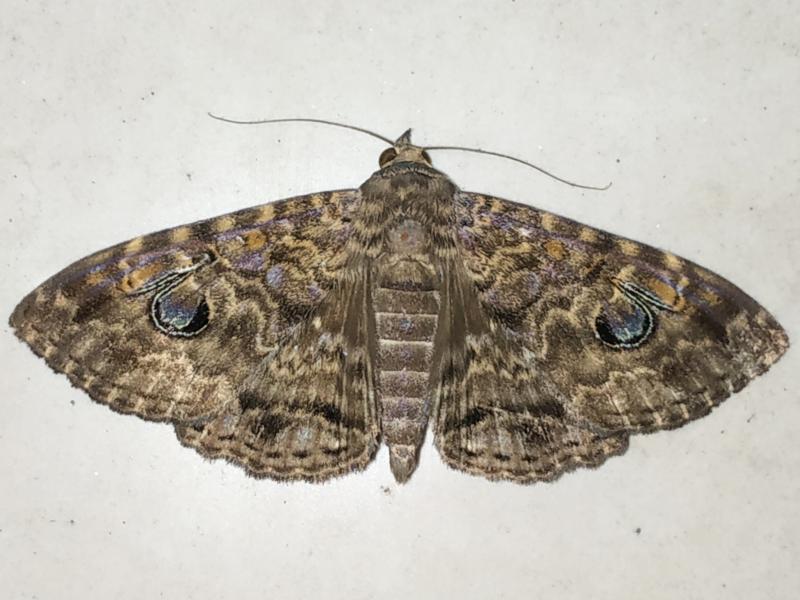
Zilli et al. explain in much detail the numerous issues that are involved in the validation of this taxon (page 32). Apparently because many specimens of Fabricius are not true holotypes and the synonymies/illustrations are badly intertwined, the concept of S. itynx has solely been centered on the characteristic shape of its 3-shaped post-discal stigma which stands out from other species in the genus.
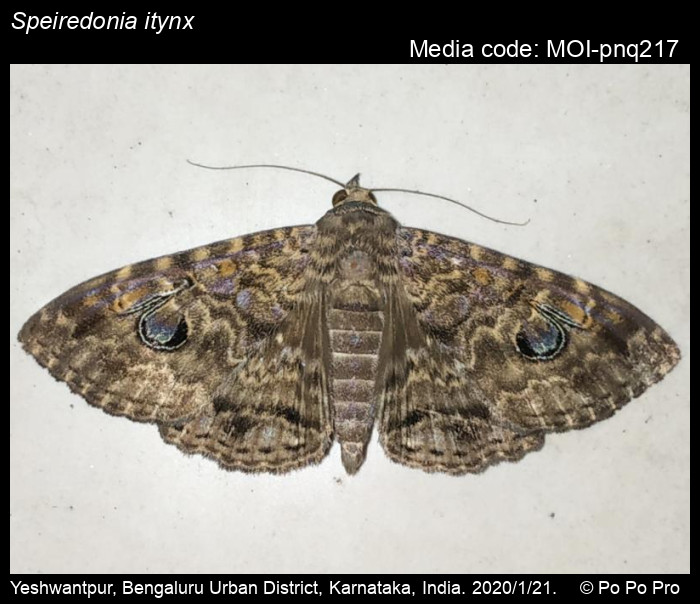
As visible in this specimen, the branches of the 3-shaped mark are separated by a long, flat wedge (double line, each interlined with white, and almost separate), as opposed to connected single black lines in species like S. obscura.
The other clearly visible details are a round cell-spot filled in with bright rufous (smaller and less rufous in S. obscura), a dark rectangular dash between the '3' mark and the apex, and dashed marginal lines -the upper one with more space between the dashes (as opposed to dentate wavy upper line in S. obscura).
The patterns in this specimen are a good match for the male in Fig.9 of Zilli et al. (page 20; the female in Fig.10 shows some pale colouration in the subterminal region).
There are numerous observations on iNaturalist of this species from S. India and Sri Lanka, many misidentified as S. obscura. Some examples below:
https://www.inaturalist.org/observations/107822303
https://www.inaturalist.org/observations/85438017
https://www.inaturalist.org/observations/129028126
https://www.inaturalist.org/observations/117055682
https://www.inaturalist.org/observations/3758450
All the above specimens show great consistency in the patterns.
Though the original literature is no longer reliable, Zilli et al. have chosen to retain this taxon as S. itynx after much careful consideration. They mention a broad distribution, but I fail to spot specimens on the web excepting S. India, Ceylon, and the Indonesian specimen figures in the Zilli publication.
Given that there are several observations from southern. India, incl. Tamil Nadu, that the type locality of Fabricius is the Coromandel coast, and that this species seems quite common in the region (second only to S. obscura) I feel we can cite Zilli et al. and confidently ID this species as S. itynx.
SS: I agree with ID. However, we collected specimens of three species from S. India, during our Shendurney survey in 2014. I have asked Yash to send the specimen images with scale, to get a sense of size.
My own notes on Speiredonia itynx: Small-sized species. Background essentially brownish, occasionally with variable expression of white markings; forewing elongate, superior and inferior branches of the "figure-3" postdiscal stigma of forewing fully separated by long and flat wedge.
Po-po-pro: Thanks for reviewing it. Yes, size is important, and I had unfortunately not started used a size marker then. It is quite small, indeed. Maybe one order of size bigger than Anticarsia irrorata.
I had discussed this species with Dr. Kendrick on iNaturalist long ago, and he was firm in his belief that this taxon is still very flimsy and that the Indonesian photo has some differences. But the type locality is a major factor which will make sure the Indian specimens will retain this name, even in the unlikely scenario that someone splits the taxon in the future.
YS: Agree with ID although Speiredonia itynx definitely has some issues as species.
References
As we know for this genus, most of the detail is in the Zilli et al. (2005) Speiredonia review (Ref. 5). The other references merely provide chronological context.
1. https://www.biodiversitylibrary.org/item/82321#page/142/mode/1up
(original description by J. C. Fabricius in Mantissa insectorum...1787 as Noctua itynx; type locality Coromandel coast. Zilli et al. note that this 'description is so general that it might apply to a number of species'.
https://www.nhm.ac.uk/our-science/data/lepindex/detail/?taxonno=288680&&snoc=itynx&search_type=starts&sort=snoc&indexed_from=1&page_no=1&page_size=30&path=search
(NHM Lepindex card)
2.
https://www.biodiversitylibrary.org/page/39337302#page/333/mode/1up (description of Sericia parvipennis by F. Walker, 1857, now considered a synonym)
3.
https://www.biodiversitylibrary.org/item/45768#page/271/mode/1up (illustration by Geyer in Zuträge
zur Sammlung exotischer Schmetterlinge 4; pl. 134, fig. 777-778)
4.
https://www.biodiversitylibrary.org/page/9340272#page/165/mode/1up (description by F. Moore as Speiredonia feducia in Lep. Ceylon v.3) with accompanying illustration:
https://www.biodiversitylibrary.org/page/9340272#page/643/mode/1up (pl. 164, fig 2)
5.
An overview of the genus Speiredonia with description of seven new species (Zilli, Holloway, and Hogenes, 2005; habitus images of specimens Fig.9 male, Fig.10 female)
6. https://www.mothsofborneo.com/part-15-16/hulodini/hulodini_3.php (photograph of S. itynx paratype, in Moths of Borneo)
Notes
Zilli et al. explain in much detail the numerous issues that are involved in the validation of this taxon (page 32). Apparently because many specimens of Fabricius are not true holotypes and the synonymies/illustrations are badly intertwined, the concept of S. itynx has solely been centered on the characteristic shape of its 3-shaped post-discal stigma which stands out from other species in the genus.
As visible in this specimen, the branches of the 3-shaped mark are separated by a long, flat wedge (double line, each interlined with white, and almost separate), as opposed to connected single black lines in species like S. obscura.
The other clearly visible details are a round cell-spot filled in with bright rufous (smaller and less rufous in S. obscura), a dark rectangular dash between the '3' mark and the apex, and dashed marginal lines -the upper one with more space between the dashes (as opposed to dentate wavy upper line in S. obscura).
The patterns in this specimen are a good match for the male in Fig.9 of Zilli et al. (page 20; the female in Fig.10 shows some pale colouration in the subterminal region).
There are numerous observations on iNaturalist of this species from S. India and Sri Lanka, many misidentified as S. obscura. Some examples below:
https://www.inaturalist.org/observations/107822303
https://www.inaturalist.org/observations/85438017
https://www.inaturalist.org/observations/129028126
https://www.inaturalist.org/observations/117055682
https://www.inaturalist.org/observations/3758450
All the above specimens show great consistency in the patterns.
Though the original literature is no longer reliable, Zilli et al. have chosen to retain this taxon as S. itynx after much careful consideration. They mention a broad distribution, but I fail to spot specimens on the web excepting S. India, Ceylon, and the Indonesian specimen figures in the Zilli publication.
Given that there are several observations from southern. India, incl. Tamil Nadu, that the type locality of Fabricius is the Coromandel coast, and that this species seems quite common in the region (second only to S. obscura) I feel we can cite Zilli et al. and confidently ID this species as S. itynx.
SS: I agree with ID. However, we collected specimens of three species from S. India, during our Shendurney survey in 2014. I have asked Yash to send the specimen images with scale, to get a sense of size.
My own notes on Speiredonia itynx: Small-sized species. Background essentially brownish, occasionally with variable expression of white markings; forewing elongate, superior and inferior branches of the "figure-3" postdiscal stigma of forewing fully separated by long and flat wedge.
Po-po-pro: Thanks for reviewing it. Yes, size is important, and I had unfortunately not started used a size marker then. It is quite small, indeed. Maybe one order of size bigger than Anticarsia irrorata.
I had discussed this species with Dr. Kendrick on iNaturalist long ago, and he was firm in his belief that this taxon is still very flimsy and that the Indonesian photo has some differences. But the type locality is a major factor which will make sure the Indian specimens will retain this name, even in the unlikely scenario that someone splits the taxon in the future.
YS: Agree with ID although Speiredonia itynx definitely has some issues as species.
Name for copyright (do not include copyright symbol)
Po Po Pro
Location (type location name here, or create a new location below under "Choose on the map")
HighLighted Contributions
No
Species Node
Overwrite img
Organism
Butterfly
Moth Taxon search:
Month
January
Year
2020
Day
21
Choose copyright license
Creative Commons (CC-BY-NC 4.0 International license)