Image
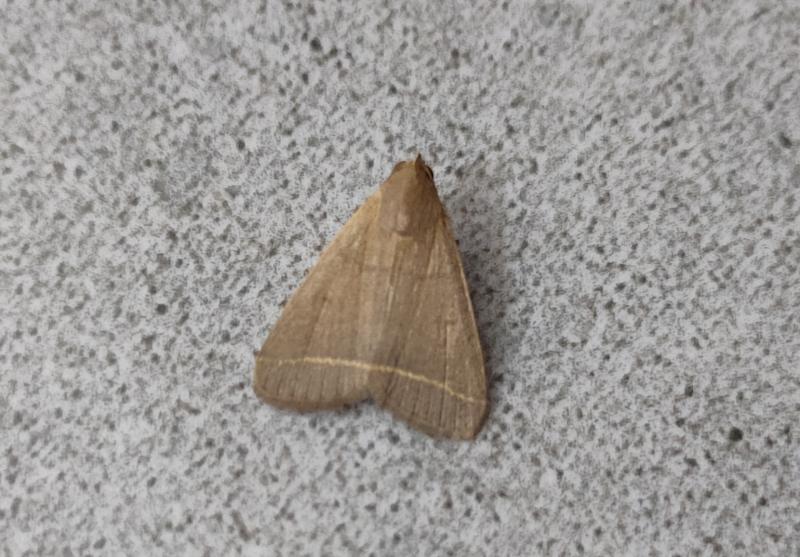
Life stage
Email (of contributor)
dr.vtalalu@gmail.com
Notes (optional)
Simplicia cornicalis (Fabricius, 1794)
Phalaena cornicalis Fabricius, 1794; Ent. Syst. 3 (2): 229; TL: East Indies. Text at https://archive.org/details/entomologiasyst3fabr/page/229/mode/1up?view=theater (in French)
MOT Vol. 3, Part 2. Pg. 26, Pl. 2/22. Lists Simplicia caeneusalis as a synonym for Simplicia cornicalis but lists Simplicia robustalis as a valid taxon.
Sophronia ? caeneusalis Walker, [1859]; List Spec. Lepid. Insects Colln Br. Mus. 16: 94; TL: Moreton Bay [Queensland]. Text at https://archive.org/details/listofspecimenso1618brit/page/94/mode/1up?view=theater
Bocana robustalis Walker, [1866]; List Spec. Lepid. Insects Colln Br. Mus. 34: 1172 (preocc. Herminia robustalis Guenée, 1854); TL: Morty. Text at https://archive.org/details/listofspecimenso3334brit/page/1172/mode/1up?view=theater
Aginna simulata Moore, 1882; In Hewitson & Moore. Description of new Indian Lepidopterous Insects from the collection of the late Mr. W. S. Atkinson. Pg. 195; TL: Bombay; Calcutta.
Libisosa obiana Swinhoe, 1919; Ann. Mag. nat. Hist. (9) 4 (21): 123; TL: Obi. Text at https://archive.org/details/annalsmagazineof941919lond/page/123/mode/1up?view=theater
Simplicia robustalis; Hampson, FBI, Vol. 3, pg. 36, # 2797, Fig. 16. Text at https://www.biodiversitylibrary.org/item/120138#page/72/mode/1up
Simplicia caeneusalis; [POOLE]; Owada, 1992, Tinea 13 (18): 188;
Owada, M. 1992. Synonymic notes on the herminiine moths (Noctuidae) of Japan, with description of three new species, Tinea 13 (18) : 183-203. Pg. 188, Fig 42-47.
Synonymizes Bocana robustalis, Aginna simulata, Libisosa obiana, Simplicia lautokiensis and Simplicia ryukyuensis with Simplicia caeneusalis.
https://www.mothsofborneo.com/part-17/herminiinae/herminiinae_22_3.php also confirms Simplicia caeneusalis as synonym.
https://www.inaturalist.org/taxa/243955-Simplicia-cornicalis
http://mothphotographersgroup.msstate.edu/species.php?hodges=8339.1
https://www.butterfliesandmoths.org/species/Simplicia-cornicalis
http://lepidoptera.butterflyhouse.com.au/herm/caeneusalis.html as Simplicia caeneusalis a synonym for Simplicia cornicalis
Chandra, K., Gupta, D., Gopi, K.C., Tripathy, B. and Kumar, V., 2018. Faunal Diversity of Indian Himalaya: 1-872. (Published by the Director, Zool. Surv. India, Kolkata). Lists Simplicia caeneusalis from the Indian Himalaya.
Extralimital species
Simplicia xanthonoma and Simplicia pseudoniphona are similar species (See Tinea 13 (18)).
Simplicia pseudeusalis Holloway and Simplicia acutivalva Holloway
(extralimital).
Simplicia butesalis (Walker, [1859]). Extralimital.
RS: Seems to be correct, but how do we distinguish this species from Simplicia niphona? Also reported from Ceylon & S. India. Seeing the underside on the pinned specimen (if the other one was collected from Doon) would be useful.
https://www.nic.funet.fi/pub/sci/bio/life/insecta/lepidoptera/ditrysia/noctuoidea/erebidae/herminiinae/simplicia/#niphona
SS: Yes, I agree, that without a specimen, it seems difficult to separate this from Simplicia niphona (Butler, 1878)
Bocana niphona Butler, 1878; Ill. typical Spec. Lepid. Het. Colln Br. Mus. 2: 56, pl. 38, f. 8; TL: Yokohama. Text at https://archive.org/details/illustrationsoft02brit/page/56/mode/1up?view=theater. Plate at https://archive.org/details/illustrationsoft02brit/page/n112/mode/1up?view=theater
Simplicia niphona olivacea Prout, 1929, Bull. Hill Mus. Witley, 3: 18.
Simplicia niphona superior Prout, 1929, Bull. Hill Mus. Witley, 3: 18.
https://www.mothsofborneo.com/part-17/herminiinae/herminiinae_22_10.php
Diagnosis. This is a larger species than macrotheca and butesalis, the male antennae being fasciculate, with a distinct flexure at a strong node at one quarter. The darker fasciation of the forewing is obscure, and markings on the underside are generally weaker than in the other species, particularly the hindwing submarginal which, if present, has the darker component stronger than the paler one.
Both this species and Simplicia cornicalis have a kink on the antennae at 1/3 to 1/4th. Possibly we leave this at genus level.
Phalaena cornicalis Fabricius, 1794; Ent. Syst. 3 (2): 229; TL: East Indies. Text at https://archive.org/details/entomologiasyst3fabr/page/229/mode/1up?view=theater (in French)
MOT Vol. 3, Part 2. Pg. 26, Pl. 2/22. Lists Simplicia caeneusalis as a synonym for Simplicia cornicalis but lists Simplicia robustalis as a valid taxon.
Sophronia ? caeneusalis Walker, [1859]; List Spec. Lepid. Insects Colln Br. Mus. 16: 94; TL: Moreton Bay [Queensland]. Text at https://archive.org/details/listofspecimenso1618brit/page/94/mode/1up?view=theater
Bocana robustalis Walker, [1866]; List Spec. Lepid. Insects Colln Br. Mus. 34: 1172 (preocc. Herminia robustalis Guenée, 1854); TL: Morty. Text at https://archive.org/details/listofspecimenso3334brit/page/1172/mode/1up?view=theater
Aginna simulata Moore, 1882; In Hewitson & Moore. Description of new Indian Lepidopterous Insects from the collection of the late Mr. W. S. Atkinson. Pg. 195; TL: Bombay; Calcutta.
Libisosa obiana Swinhoe, 1919; Ann. Mag. nat. Hist. (9) 4 (21): 123; TL: Obi. Text at https://archive.org/details/annalsmagazineof941919lond/page/123/mode/1up?view=theater
Simplicia robustalis; Hampson, FBI, Vol. 3, pg. 36, # 2797, Fig. 16. Text at https://www.biodiversitylibrary.org/item/120138#page/72/mode/1up
Simplicia caeneusalis; [POOLE]; Owada, 1992, Tinea 13 (18): 188;
Owada, M. 1992. Synonymic notes on the herminiine moths (Noctuidae) of Japan, with description of three new species, Tinea 13 (18) : 183-203. Pg. 188, Fig 42-47.
Synonymizes Bocana robustalis, Aginna simulata, Libisosa obiana, Simplicia lautokiensis and Simplicia ryukyuensis with Simplicia caeneusalis.
https://www.mothsofborneo.com/part-17/herminiinae/herminiinae_22_3.php also confirms Simplicia caeneusalis as synonym.
https://www.inaturalist.org/taxa/243955-Simplicia-cornicalis
http://mothphotographersgroup.msstate.edu/species.php?hodges=8339.1
https://www.butterfliesandmoths.org/species/Simplicia-cornicalis
http://lepidoptera.butterflyhouse.com.au/herm/caeneusalis.html as Simplicia caeneusalis a synonym for Simplicia cornicalis
Chandra, K., Gupta, D., Gopi, K.C., Tripathy, B. and Kumar, V., 2018. Faunal Diversity of Indian Himalaya: 1-872. (Published by the Director, Zool. Surv. India, Kolkata). Lists Simplicia caeneusalis from the Indian Himalaya.
Extralimital species
Simplicia xanthonoma and Simplicia pseudoniphona are similar species (See Tinea 13 (18)).
Simplicia pseudeusalis Holloway and Simplicia acutivalva Holloway
(extralimital).
Simplicia butesalis (Walker, [1859]). Extralimital.
RS: Seems to be correct, but how do we distinguish this species from Simplicia niphona? Also reported from Ceylon & S. India. Seeing the underside on the pinned specimen (if the other one was collected from Doon) would be useful.
https://www.nic.funet.fi/pub/sci/bio/life/insecta/lepidoptera/ditrysia/noctuoidea/erebidae/herminiinae/simplicia/#niphona
SS: Yes, I agree, that without a specimen, it seems difficult to separate this from Simplicia niphona (Butler, 1878)
Bocana niphona Butler, 1878; Ill. typical Spec. Lepid. Het. Colln Br. Mus. 2: 56, pl. 38, f. 8; TL: Yokohama. Text at https://archive.org/details/illustrationsoft02brit/page/56/mode/1up?view=theater. Plate at https://archive.org/details/illustrationsoft02brit/page/n112/mode/1up?view=theater
Simplicia niphona olivacea Prout, 1929, Bull. Hill Mus. Witley, 3: 18.
Simplicia niphona superior Prout, 1929, Bull. Hill Mus. Witley, 3: 18.
https://www.mothsofborneo.com/part-17/herminiinae/herminiinae_22_10.php
Diagnosis. This is a larger species than macrotheca and butesalis, the male antennae being fasciculate, with a distinct flexure at a strong node at one quarter. The darker fasciation of the forewing is obscure, and markings on the underside are generally weaker than in the other species, particularly the hindwing submarginal which, if present, has the darker component stronger than the paler one.
Both this species and Simplicia cornicalis have a kink on the antennae at 1/3 to 1/4th. Possibly we leave this at genus level.
Name for copyright (do not include copyright symbol)
Arun Lal
Location (type location name here, or create a new location below under "Choose on the map")
HighLighted Contributions
No
Species Node
Overwrite img
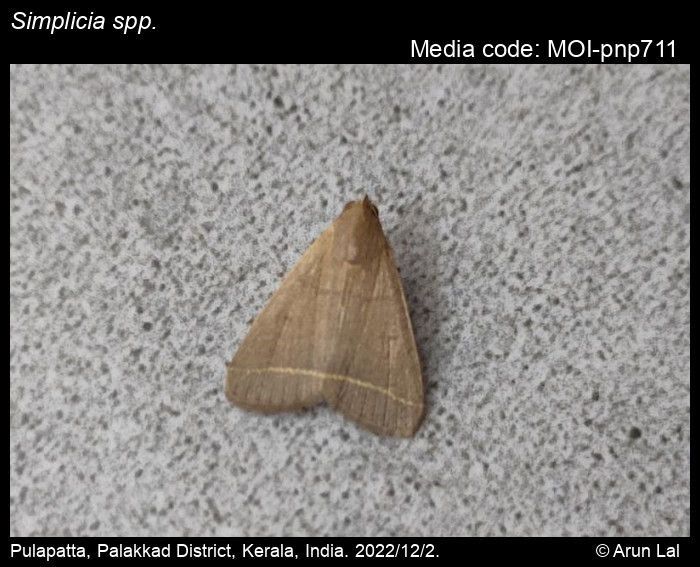
Organism
Butterfly
Moth Taxon search:
Month
December
Year
2022
Day
2
Choose copyright license
Copyrighted (all rights reserved)