Image
Life stage
Email (of contributor)
po.po.pro.moths@gmail.com
Notes (optional)
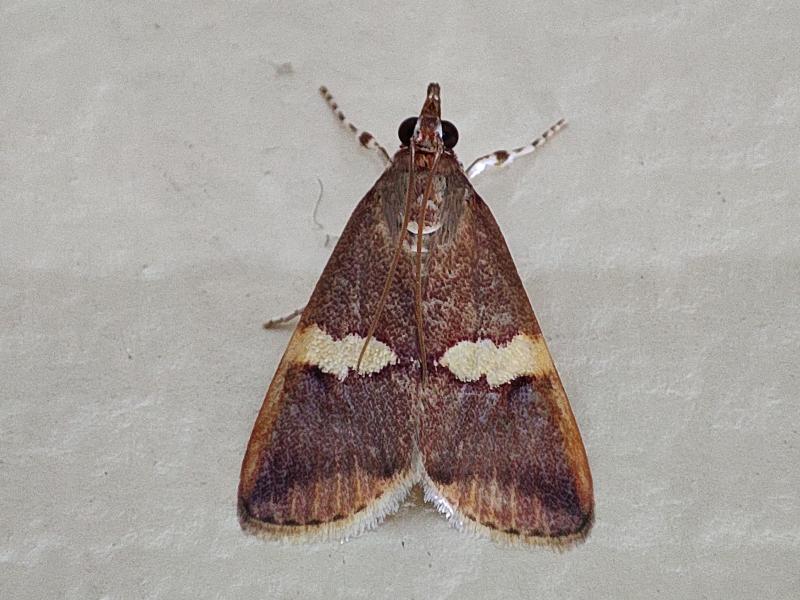
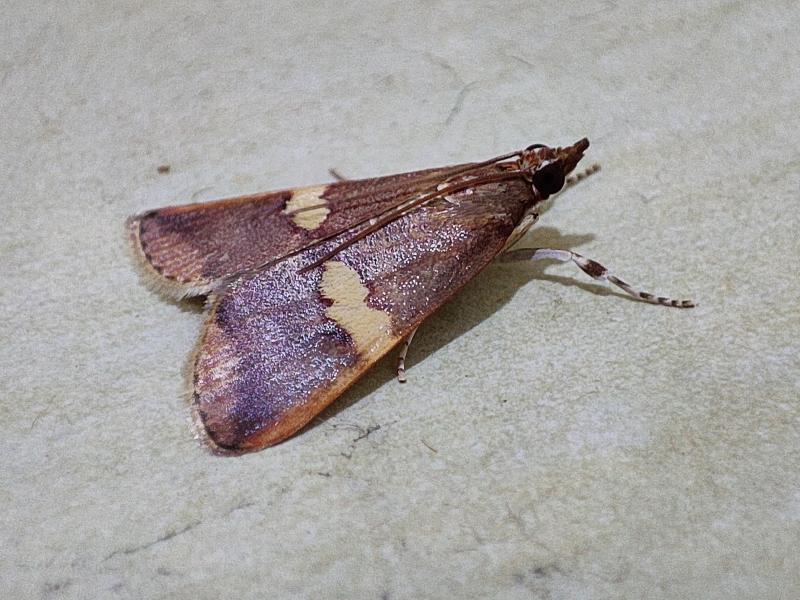
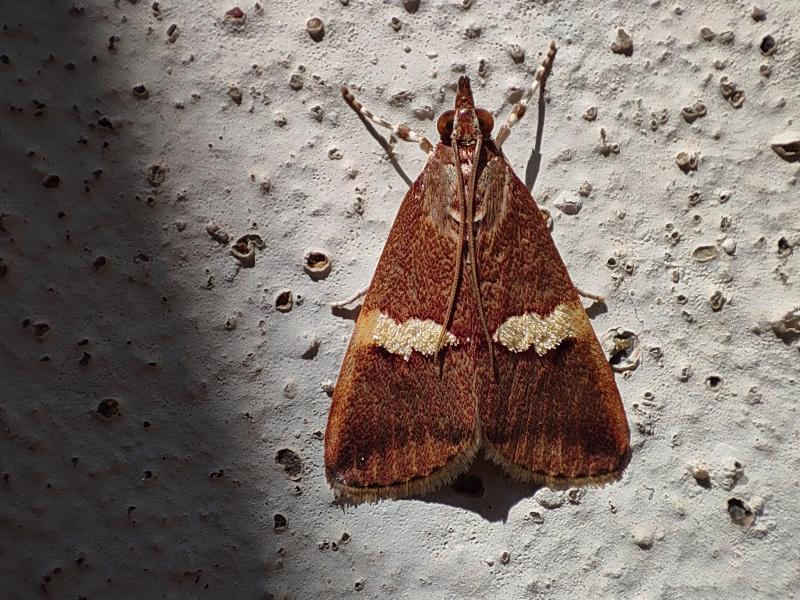
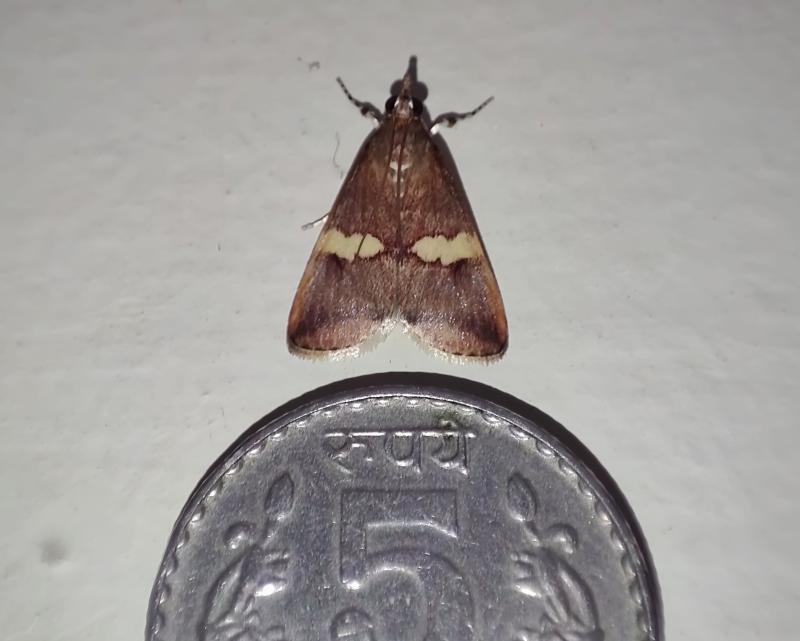
Proposed ID: Boeotarcha martinalis (Walker, 1859)
References
1.
https://www.biodiversitylibrary.org/item/120189#page/821/mode/1up (description of a female as Scopula martinalis by F. Walker in Cat. Lep. B.M. vol. 16-18, 1859; type locality Hindostan)
This description doesn't match this specimen, for reasons discussed below.
2.
https://www.biodiversitylibrary.org/item/120100#page/761/mode/1up (description of a male as Botys crassicornis by F. Walker in Cat. Lep. B.M. vol. 33-34, 1865; type locality not mentioned in text but mentioned as Burma in NHM Lepindex card)
This description is more or less similar to the specimen in my observation, with caveats.
3.
https://www.biodiversitylibrary.org/item/51064#page/335/mode/1up (Erection of the new genus Boeotarcha by E. Meyrick in Trans. Ent. Soc. Lon., 1884)
In this, Meyrick erects Boeotarcha, calling it 'a peculiar genus' and synonymises (?) Walker's Botys crassicornis and Snellen's Botys taenialis.
Meyrick says he hasn't examined the male; Meyrick's specimens are females from Australia and Celebes)
4. https://www.biodiversitylibrary.org/item/40933#page/339/mode/1up (description of a male Botys taenialis by P. Snellen in Tijd. v. Entomol. vol.23, 1880; type locality Sulawesi)
https://www.biodiversitylibrary.org/item/40935#page/300/mode/1up (illustration in Pl.7, fig.3 in Tijd. v. Entomol. vol. 26)
5.
https://www.biodiversitylibrary.org/page/40410459#page/450/mode/1up (description as Boeotarcha martinalis by G. Hampson in Fauna of British India vol.4, 1896, synonymising Walker's martinalis and crassicornis)
Hampson mentions that both are different forms of the same species, with the band in the middle of the wing varying markedly in pattern and size between the two forms. (In the OD, Walker's female specimen of martinalis is 'fawn coloured', as opposed to the reddish 'crassicornis'.)
Lepindex and GlobizPyraloidea mention crassicornis as a junior synonym of martinalis.
Snellen's taenialis is regarded as a separate species, but the description and illustration are very similar to the Walker's crassicornis and I'm including it in the references list because Meyrick seems to list them together.)
6. The natural history of insect herbivory on mangrove trees in and around Singapore, by D. H. Murphy [Raffles Bulletin of Zoology, 1990; 38(2); pdf available online]
Thanks to Jahir Rayhan for digging up this reference on an old Facebook post about Boeotarcha (linking Jahir's post here for reference –
https://www.facebook.com/groups/927116764299160/permalink/1006074033070099/?app=fbl)
In this reference, Murphy displays photographs of larvae and adults (both sexes) of B. crassicornis; Plate 15, pg.182-183).
A couple of points to note are that two females are shown, and the medial yellowish band is of a different shape in each specimen, and that Murphy reserves opinion about the synonymy between crassicornis and martinalis because he feels the male holotype of martinalis is 'very differently patterned to the rest'. He lists his specimens as B. crassicornis.
______________________
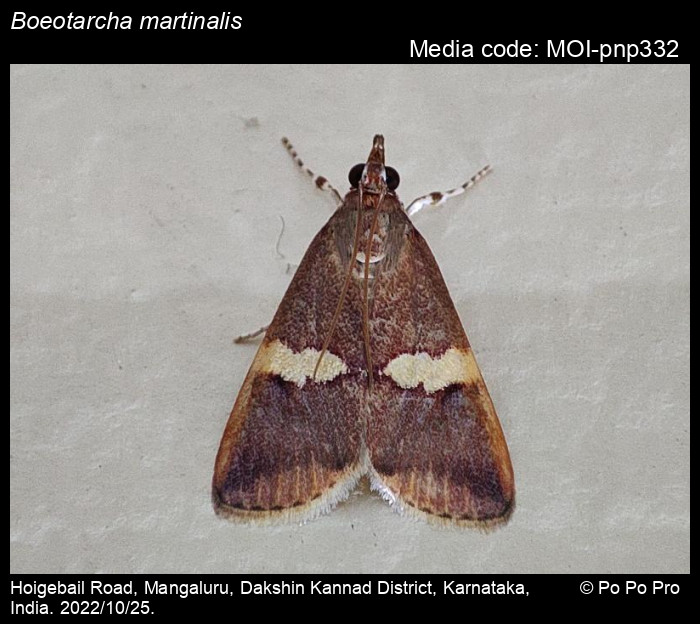
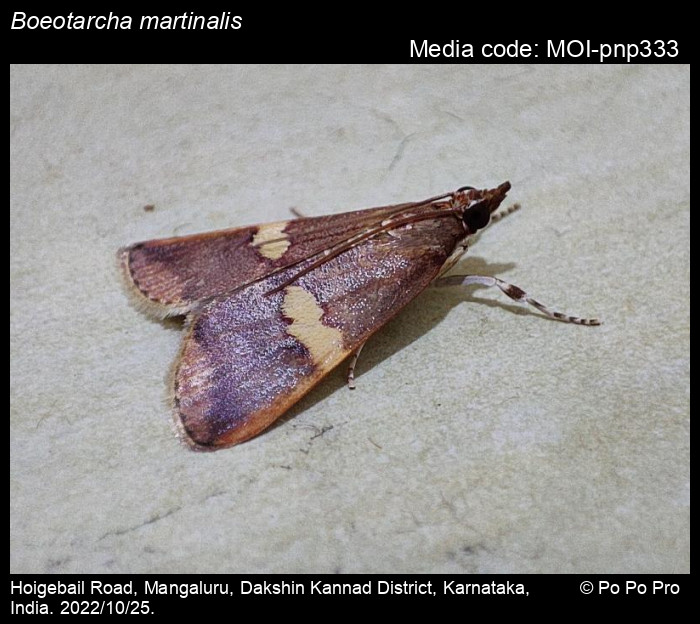
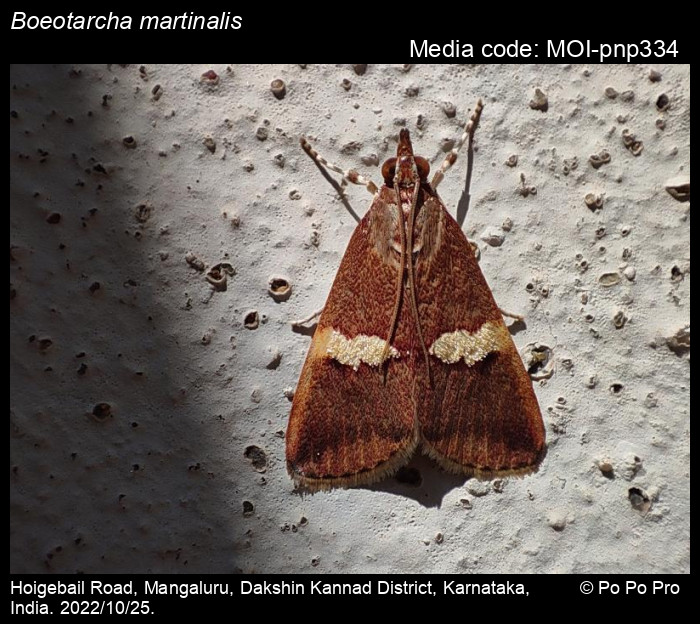
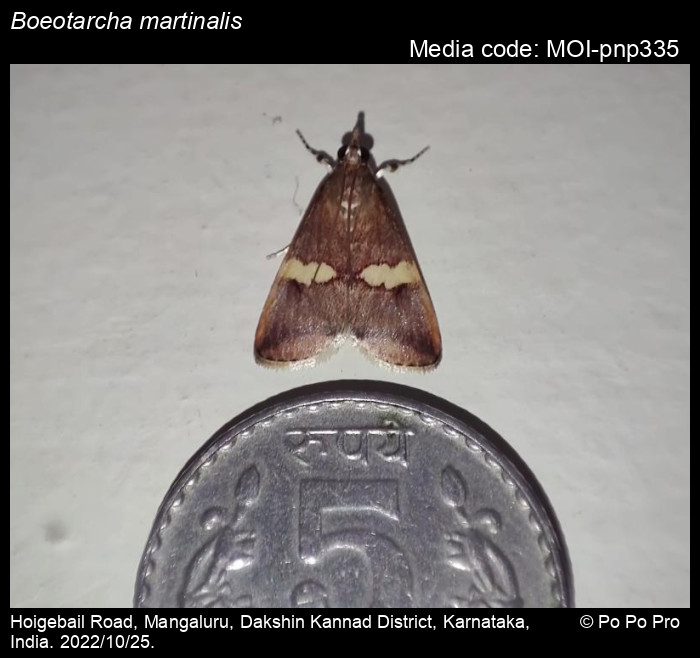
Notes: This observation is likely a female (based on abdomen morphology). There are not many images of this species available on the web for comparison, hence I have proposed this ID because of the following reasons:
– martinalis is synonymised with crassicornis currently in GlobizPyraloidea, based on Hampson's notes
– it is the only species reported with type locality India. However, If the synonymies are true, it is a very widespread species ranging all the way to Australia.
–https://www.inaturalist.org/observations/98869189
An user mentions in the iNaturalist link above that they have "a series of this species and the silver (sic) bar varies enormously.. It can be thin, broad, or segmented."
I tend to believe this explanation of the band pattern variation, because most of the user's Lepidoptera observations are well-documented pinned specimens with coordinates etc. Though they haven't uploaded images of this species, they seem to have collected a number of specimens which makes it likely that their remarks are well-founded.
This would partially explain Hampson's synonymy, too.
However, if we give weight to Murphy's words in the Singapore text, it would go as Boeotarcha crassicornis (as Murphy has treated it), or as Boeotarcha sp.
I have uploaded a couple of extra images in this observation because the colours on the forewing appear different to the eye according to the amount of light falling on the object.
JR: I will go with B. martinalis as well.
SS: Agree with ID.
References
1.
https://www.biodiversitylibrary.org/item/120189#page/821/mode/1up (description of a female as Scopula martinalis by F. Walker in Cat. Lep. B.M. vol. 16-18, 1859; type locality Hindostan)
This description doesn't match this specimen, for reasons discussed below.
2.
https://www.biodiversitylibrary.org/item/120100#page/761/mode/1up (description of a male as Botys crassicornis by F. Walker in Cat. Lep. B.M. vol. 33-34, 1865; type locality not mentioned in text but mentioned as Burma in NHM Lepindex card)
This description is more or less similar to the specimen in my observation, with caveats.
3.
https://www.biodiversitylibrary.org/item/51064#page/335/mode/1up (Erection of the new genus Boeotarcha by E. Meyrick in Trans. Ent. Soc. Lon., 1884)
In this, Meyrick erects Boeotarcha, calling it 'a peculiar genus' and synonymises (?) Walker's Botys crassicornis and Snellen's Botys taenialis.
Meyrick says he hasn't examined the male; Meyrick's specimens are females from Australia and Celebes)
4. https://www.biodiversitylibrary.org/item/40933#page/339/mode/1up (description of a male Botys taenialis by P. Snellen in Tijd. v. Entomol. vol.23, 1880; type locality Sulawesi)
https://www.biodiversitylibrary.org/item/40935#page/300/mode/1up (illustration in Pl.7, fig.3 in Tijd. v. Entomol. vol. 26)
5.
https://www.biodiversitylibrary.org/page/40410459#page/450/mode/1up (description as Boeotarcha martinalis by G. Hampson in Fauna of British India vol.4, 1896, synonymising Walker's martinalis and crassicornis)
Hampson mentions that both are different forms of the same species, with the band in the middle of the wing varying markedly in pattern and size between the two forms. (In the OD, Walker's female specimen of martinalis is 'fawn coloured', as opposed to the reddish 'crassicornis'.)
Lepindex and GlobizPyraloidea mention crassicornis as a junior synonym of martinalis.
Snellen's taenialis is regarded as a separate species, but the description and illustration are very similar to the Walker's crassicornis and I'm including it in the references list because Meyrick seems to list them together.)
6. The natural history of insect herbivory on mangrove trees in and around Singapore, by D. H. Murphy [Raffles Bulletin of Zoology, 1990; 38(2); pdf available online]
Thanks to Jahir Rayhan for digging up this reference on an old Facebook post about Boeotarcha (linking Jahir's post here for reference –
https://www.facebook.com/groups/927116764299160/permalink/1006074033070099/?app=fbl)
In this reference, Murphy displays photographs of larvae and adults (both sexes) of B. crassicornis; Plate 15, pg.182-183).
A couple of points to note are that two females are shown, and the medial yellowish band is of a different shape in each specimen, and that Murphy reserves opinion about the synonymy between crassicornis and martinalis because he feels the male holotype of martinalis is 'very differently patterned to the rest'. He lists his specimens as B. crassicornis.
______________________
Notes: This observation is likely a female (based on abdomen morphology). There are not many images of this species available on the web for comparison, hence I have proposed this ID because of the following reasons:
– martinalis is synonymised with crassicornis currently in GlobizPyraloidea, based on Hampson's notes
– it is the only species reported with type locality India. However, If the synonymies are true, it is a very widespread species ranging all the way to Australia.
–https://www.inaturalist.org/observations/98869189
An user mentions in the iNaturalist link above that they have "a series of this species and the silver (sic) bar varies enormously.. It can be thin, broad, or segmented."
I tend to believe this explanation of the band pattern variation, because most of the user's Lepidoptera observations are well-documented pinned specimens with coordinates etc. Though they haven't uploaded images of this species, they seem to have collected a number of specimens which makes it likely that their remarks are well-founded.
This would partially explain Hampson's synonymy, too.
However, if we give weight to Murphy's words in the Singapore text, it would go as Boeotarcha crassicornis (as Murphy has treated it), or as Boeotarcha sp.
I have uploaded a couple of extra images in this observation because the colours on the forewing appear different to the eye according to the amount of light falling on the object.
JR: I will go with B. martinalis as well.
SS: Agree with ID.
Name for copyright (do not include copyright symbol)
Po Po Pro
Location (type location name here, or create a new location below under "Choose on the map")
HighLighted Contributions
No
Species Node
Overwrite img
Organism
Butterfly
Moth Taxon search:
Month
October
Year
2022
Day
25
Choose copyright license
Creative Commons (CC-BY-NC 4.0 International license)