Image
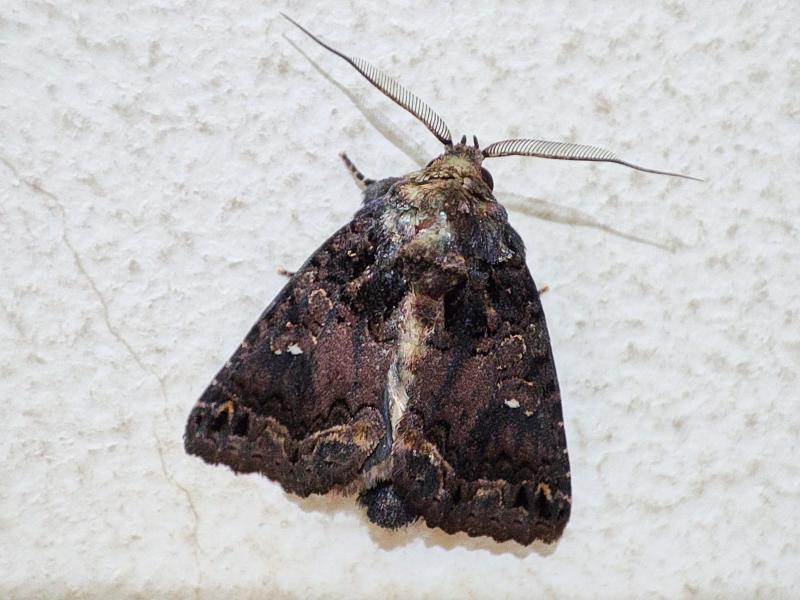
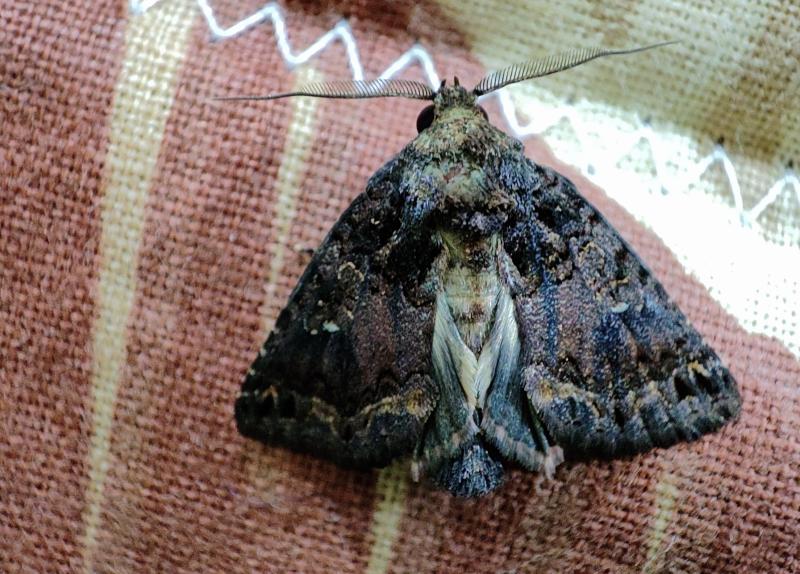
Gender (optional)
Life stage
Email (of contributor)
po.po.pro.moths@gmail.com
Notes (optional)
Proposed ID: Callopistria apicalis (Walker, 1855)
References
1. https://www.biodiversitylibrary.org/page/38952792#page/284/mode/1up (original description of a male specimen by Francis Walker in Cat. Lep. B.M. 1855, as Mosara apicalis and the erection of the genus Mosara; type locality North India)
2. https://www.biodiversitylibrary.org/page/47025507#page/511/mode/1up (description by Hampson in Fauna of British India vol. 2 with an in-text illustration and details of geographical distribution)
3. https://www.biodiversitylibrary.org/page/9340248#page/140/mode/1up (description of both the genus and the species by Moore in Lep. Ceylon vol.3 - these descriptions are elaborate and highlight the features better). There are accompanying illustrations of both sexes, but like most Lep. Ceylon illustrations they are rather crude and lack visible detail.
4. https://www.biodiversitylibrary.org/page/23357781#page/142/mode/1up (list of junior synonyms of the species in Col. Swinhoe's Cat. Aus. East. Lep. Het. vol 2, which include Anophia lateralis Walker, 1865 and Plusia inaperta Walker, 1864)
5. https://www.mothsofborneo.com/part-12/amphipyrinae/amphipyrinae_22_3.php (creation of a new combination name by Holloway in the Moths of Borneo series, bringing Mosara into synonymy with Callopistria and citing the reasons for the same)
...................
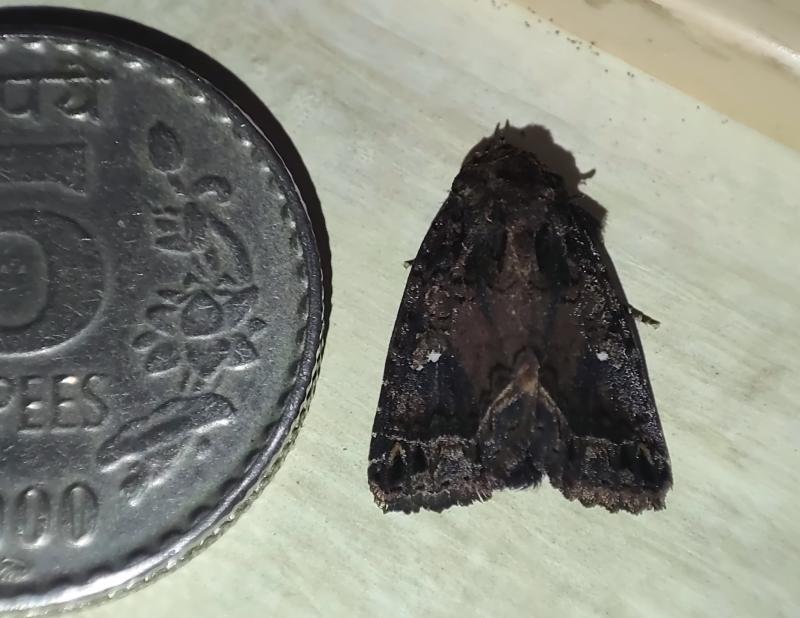
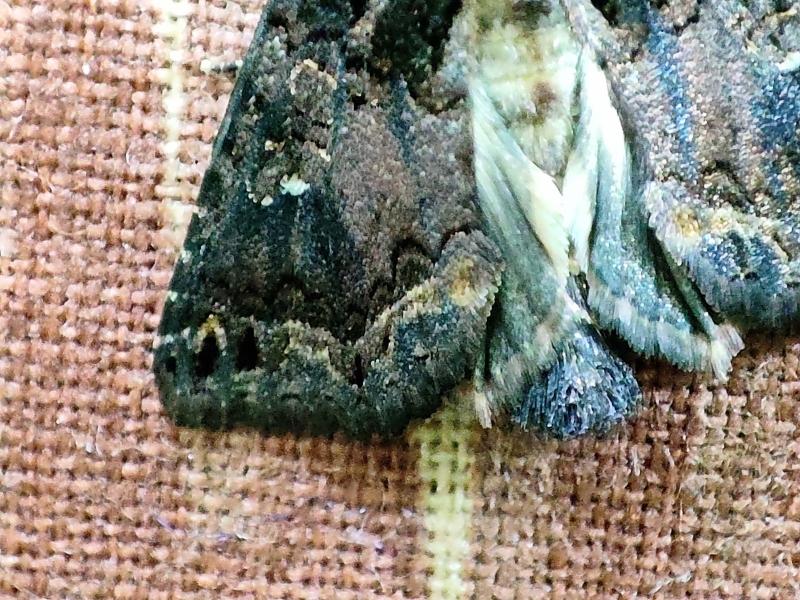
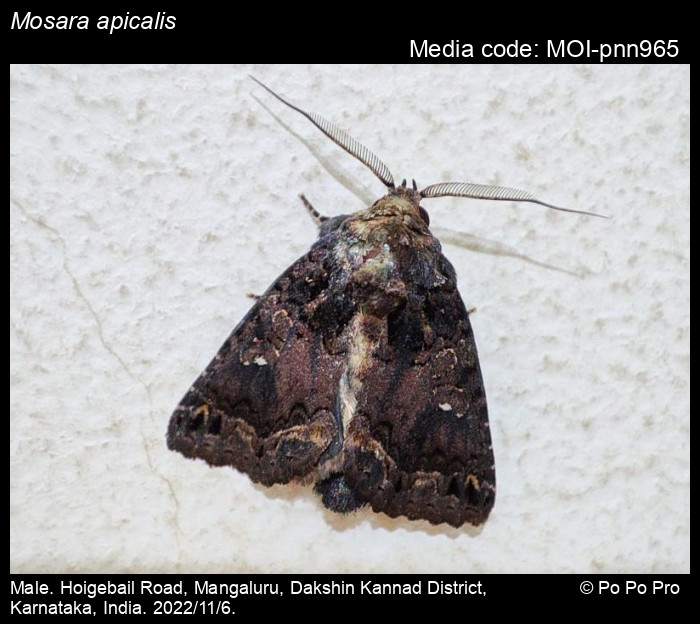
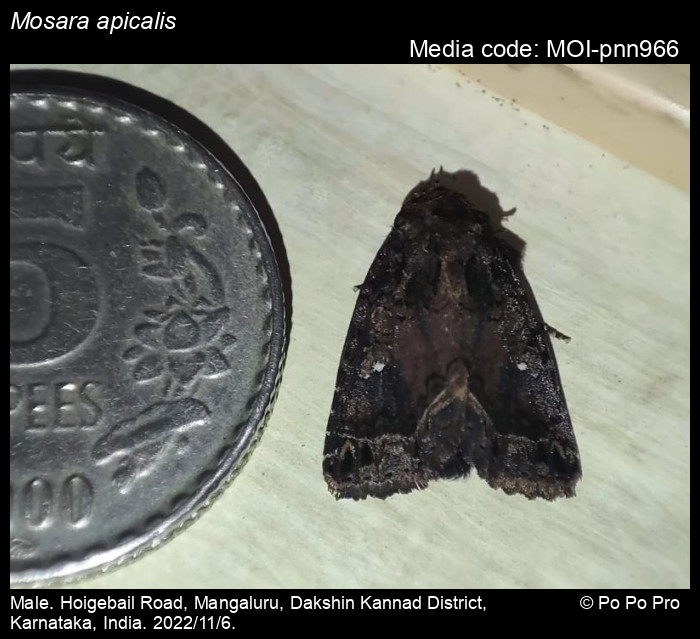
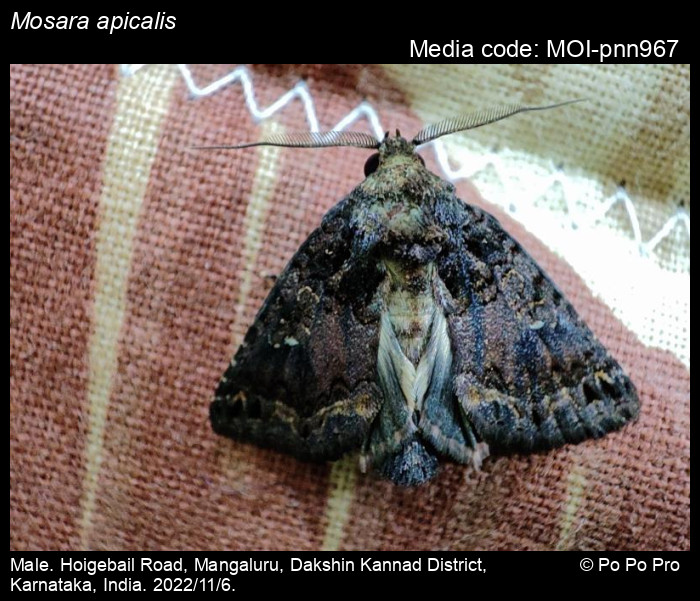
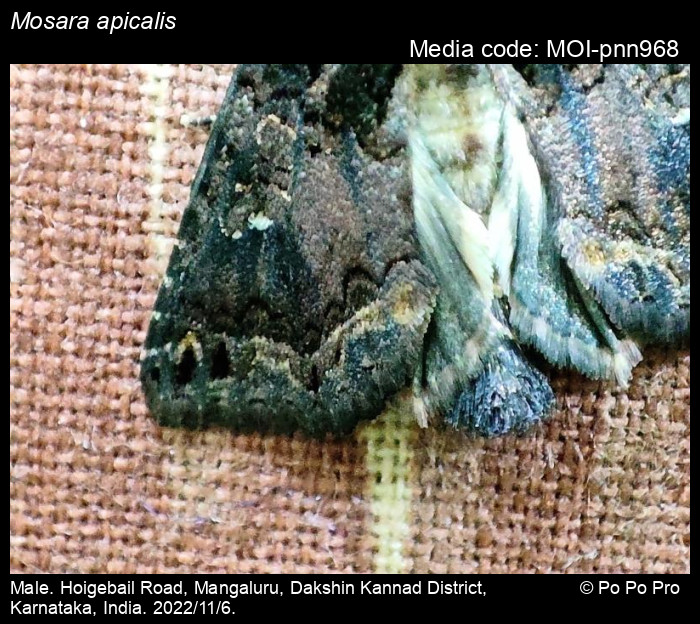
(I included two extra photos- one with a coin size marker and another in which the HW is partially visible, but please omit photos which you feel are redundant. The coin photo shows what is the general appearance of the moth - it is mostly just dark with only the whitish colouration in the reniform immediately standing out to the eye of the observer. The details become visible in photos without flash from close range.)
SS: I have just uploaded the preliminary list of Callopistria known from the Indian subcontinent to the Callopistria spp. page. While doing this, the paper Yen, S. H., & Wu, S. (2009). Hexapoda: Lepidoptera, Noctuoidea, Noctuidae (Eriopinae). Biota Taiwanica: 3-88. implies that this species should be placed in the genus Mosara; hence this species should be Mosara apicalis Walker, 1855. Pg. 8-9. I am yet to compare this species with other S. Indian Callopistria.
Description: The OD is very limited. Images in MOB don't match very well. Discrepancies are: this individual is dark brown, whereas the OD states dark brown, MOB state dull dark brown, and coloration of the specimens is quite different. Moreover, the HW in this individual is dark brown in the tonal area, which is not mentioned in the OD or in the images shown in MOB. Plusia inaperta description of female, does mention a dark border on HW, but MOB female does not show a dark border. The illustration of the female in Lepidoptera of Ceylon, Plate 159, 3a does show a black border. Some elements of the descriptions of the OD, MOB and Lepidoptera. Ceylon match, but I am not completely convinced of the ID.
Po-po-pro: Thanks for reviewing this comprehensively. The concerns you've raised are very valid ones. I still feel this species is the right match, so I'll attempt to address the concerns below. If we are not still convinced, we can wait till better evidence becomes available.
Ground colour: As you have noted, the ground colour of the FW has been described differently by different authors. Moore describes it as 'violet greyish-brown'. The two reasons for this, I believe, is that there's is a lot of gloss on the FW (much like some Plusiinae) and that the colouration is not consistent but different in different regions of the wing. To the naked eye, the moth presents itself as visible in the photo with the coin I uploaded (dark brownish, partly shining, with the white on the reniform standing out), and the finer details and patches on the wing only become visible when seen through the diffused light of the camera at an appropriate angle. The image in the MoB is definitely a bit off the mark. This moth, even when all flash is totally diffused, is not as light and homogenous in colouration as the MoB image shows. Further, the MoB images lack any detail due to their size.
Hindwing colour: This specimen is a male, due to the bipectinate antennae, pectinated to 2/3 of the length. Walker writes the females have simple antennae. Walker, in the OD, mentions the HW of the male as pale brown, whitish testaceous towards base. Moore describes it as pale violaceous cinereous brown, whitish cinereous towards lower base. From this, I infer that the darker shade is actually the ground colour of the HW, with the colour changing towards the base.
I have uploaded an additional photo for the sake of reference, with the HW captured from closer range. This photo shows the shade more like a deep ashy colour, instead of dark brown - which would be somewhat akin to the colour in the descriptions. The female HW, i understand, has a darker shade of this.
I noticed today that this species also figures in the Moths of Thailand vol.3 Noctuioidea, where images are on Plate 36, Fig. 61-63. These images are better, and show both FW and HW colouration more clearly than the images in MoB.
On iNaturalist, there are a lot of observations labelled as this species from the Hong Kong region and Malaysia, all varying in colouration and brightness to different extents as per the cameras and angles used to capture the photos.
Thanks for referencing the latest work from Biota Taiwanica. Holloway, in MoB, makes a note in the genus description of Callopistria that this species lacks a couple of features in the genitalia that are common to all other Callopistria. Indeed, to a casual observer, even the external appearance of this species would not remind one of the Callopistria moths.
SS: I had missed the MOT images, and I agree, these match more closely with the images in MOT, Vol. 3, Part 2, Pl. 36/61-63. This also mentions as Mosara apicalis Walker, 1855. Given the additional evidence, I am OK to proceed with Mosara apicalis Walker, 1855 as the ID. As per our internal protocols, I will wait for a second reviewers comments before uploading.
JD : agree with ID
RS: Really nice and thorough review Po-po-pro. Agree with ID
References
1. https://www.biodiversitylibrary.org/page/38952792#page/284/mode/1up (original description of a male specimen by Francis Walker in Cat. Lep. B.M. 1855, as Mosara apicalis and the erection of the genus Mosara; type locality North India)
2. https://www.biodiversitylibrary.org/page/47025507#page/511/mode/1up (description by Hampson in Fauna of British India vol. 2 with an in-text illustration and details of geographical distribution)
3. https://www.biodiversitylibrary.org/page/9340248#page/140/mode/1up (description of both the genus and the species by Moore in Lep. Ceylon vol.3 - these descriptions are elaborate and highlight the features better). There are accompanying illustrations of both sexes, but like most Lep. Ceylon illustrations they are rather crude and lack visible detail.
4. https://www.biodiversitylibrary.org/page/23357781#page/142/mode/1up (list of junior synonyms of the species in Col. Swinhoe's Cat. Aus. East. Lep. Het. vol 2, which include Anophia lateralis Walker, 1865 and Plusia inaperta Walker, 1864)
5. https://www.mothsofborneo.com/part-12/amphipyrinae/amphipyrinae_22_3.php (creation of a new combination name by Holloway in the Moths of Borneo series, bringing Mosara into synonymy with Callopistria and citing the reasons for the same)
...................
(I included two extra photos- one with a coin size marker and another in which the HW is partially visible, but please omit photos which you feel are redundant. The coin photo shows what is the general appearance of the moth - it is mostly just dark with only the whitish colouration in the reniform immediately standing out to the eye of the observer. The details become visible in photos without flash from close range.)
SS: I have just uploaded the preliminary list of Callopistria known from the Indian subcontinent to the Callopistria spp. page. While doing this, the paper Yen, S. H., & Wu, S. (2009). Hexapoda: Lepidoptera, Noctuoidea, Noctuidae (Eriopinae). Biota Taiwanica: 3-88. implies that this species should be placed in the genus Mosara; hence this species should be Mosara apicalis Walker, 1855. Pg. 8-9. I am yet to compare this species with other S. Indian Callopistria.
Description: The OD is very limited. Images in MOB don't match very well. Discrepancies are: this individual is dark brown, whereas the OD states dark brown, MOB state dull dark brown, and coloration of the specimens is quite different. Moreover, the HW in this individual is dark brown in the tonal area, which is not mentioned in the OD or in the images shown in MOB. Plusia inaperta description of female, does mention a dark border on HW, but MOB female does not show a dark border. The illustration of the female in Lepidoptera of Ceylon, Plate 159, 3a does show a black border. Some elements of the descriptions of the OD, MOB and Lepidoptera. Ceylon match, but I am not completely convinced of the ID.
Po-po-pro: Thanks for reviewing this comprehensively. The concerns you've raised are very valid ones. I still feel this species is the right match, so I'll attempt to address the concerns below. If we are not still convinced, we can wait till better evidence becomes available.
Ground colour: As you have noted, the ground colour of the FW has been described differently by different authors. Moore describes it as 'violet greyish-brown'. The two reasons for this, I believe, is that there's is a lot of gloss on the FW (much like some Plusiinae) and that the colouration is not consistent but different in different regions of the wing. To the naked eye, the moth presents itself as visible in the photo with the coin I uploaded (dark brownish, partly shining, with the white on the reniform standing out), and the finer details and patches on the wing only become visible when seen through the diffused light of the camera at an appropriate angle. The image in the MoB is definitely a bit off the mark. This moth, even when all flash is totally diffused, is not as light and homogenous in colouration as the MoB image shows. Further, the MoB images lack any detail due to their size.
Hindwing colour: This specimen is a male, due to the bipectinate antennae, pectinated to 2/3 of the length. Walker writes the females have simple antennae. Walker, in the OD, mentions the HW of the male as pale brown, whitish testaceous towards base. Moore describes it as pale violaceous cinereous brown, whitish cinereous towards lower base. From this, I infer that the darker shade is actually the ground colour of the HW, with the colour changing towards the base.
I have uploaded an additional photo for the sake of reference, with the HW captured from closer range. This photo shows the shade more like a deep ashy colour, instead of dark brown - which would be somewhat akin to the colour in the descriptions. The female HW, i understand, has a darker shade of this.
I noticed today that this species also figures in the Moths of Thailand vol.3 Noctuioidea, where images are on Plate 36, Fig. 61-63. These images are better, and show both FW and HW colouration more clearly than the images in MoB.
On iNaturalist, there are a lot of observations labelled as this species from the Hong Kong region and Malaysia, all varying in colouration and brightness to different extents as per the cameras and angles used to capture the photos.
Thanks for referencing the latest work from Biota Taiwanica. Holloway, in MoB, makes a note in the genus description of Callopistria that this species lacks a couple of features in the genitalia that are common to all other Callopistria. Indeed, to a casual observer, even the external appearance of this species would not remind one of the Callopistria moths.
SS: I had missed the MOT images, and I agree, these match more closely with the images in MOT, Vol. 3, Part 2, Pl. 36/61-63. This also mentions as Mosara apicalis Walker, 1855. Given the additional evidence, I am OK to proceed with Mosara apicalis Walker, 1855 as the ID. As per our internal protocols, I will wait for a second reviewers comments before uploading.
JD : agree with ID
RS: Really nice and thorough review Po-po-pro. Agree with ID
Name for copyright (do not include copyright symbol)
Po Po Pro
Location (type location name here, or create a new location below under "Choose on the map")
HighLighted Contributions
No
Species Node
Overwrite img
Organism
Butterfly
Moth Taxon search:
Month
November
Year
2022
Day
6
Choose copyright license
Creative Commons (CC-BY-NC 4.0 International license)